Communicating with Words
Engineering Communication
What's the hardest thing about writing instructions for someone else?
Words Are Hard
If writing clear instructions for another person is hard, imagine trying to write rules for a machine that can't ask questions, doesn't understand context, and always follows instructions literally.
That's exactly the challenge science fiction author Isaac Asimov explored when he created the Three Laws of Robotics, a set of rules meant to keep humans safe when working with intelligent machines. He wrote them in 1942 for a short story called "Runaround," which later became part of the 1950 collection I, Robot.
Three Laws of Robotics
- 1A robot may not injure a human being or, through inaction, allow a human being to come to harm.
- 2A robot must obey the orders given to it by human beings, except where such orders would conflict with the First Law.
- 3A robot must protect its own existence, as long as such protection does not conflict with the First or Second Law.
Which of the Three Laws do you think is the most difficult to implement or follow in real life? Why?
Can we truly control a robotic system's behavior with just a few rules?
Even the Order of Instructions Matters
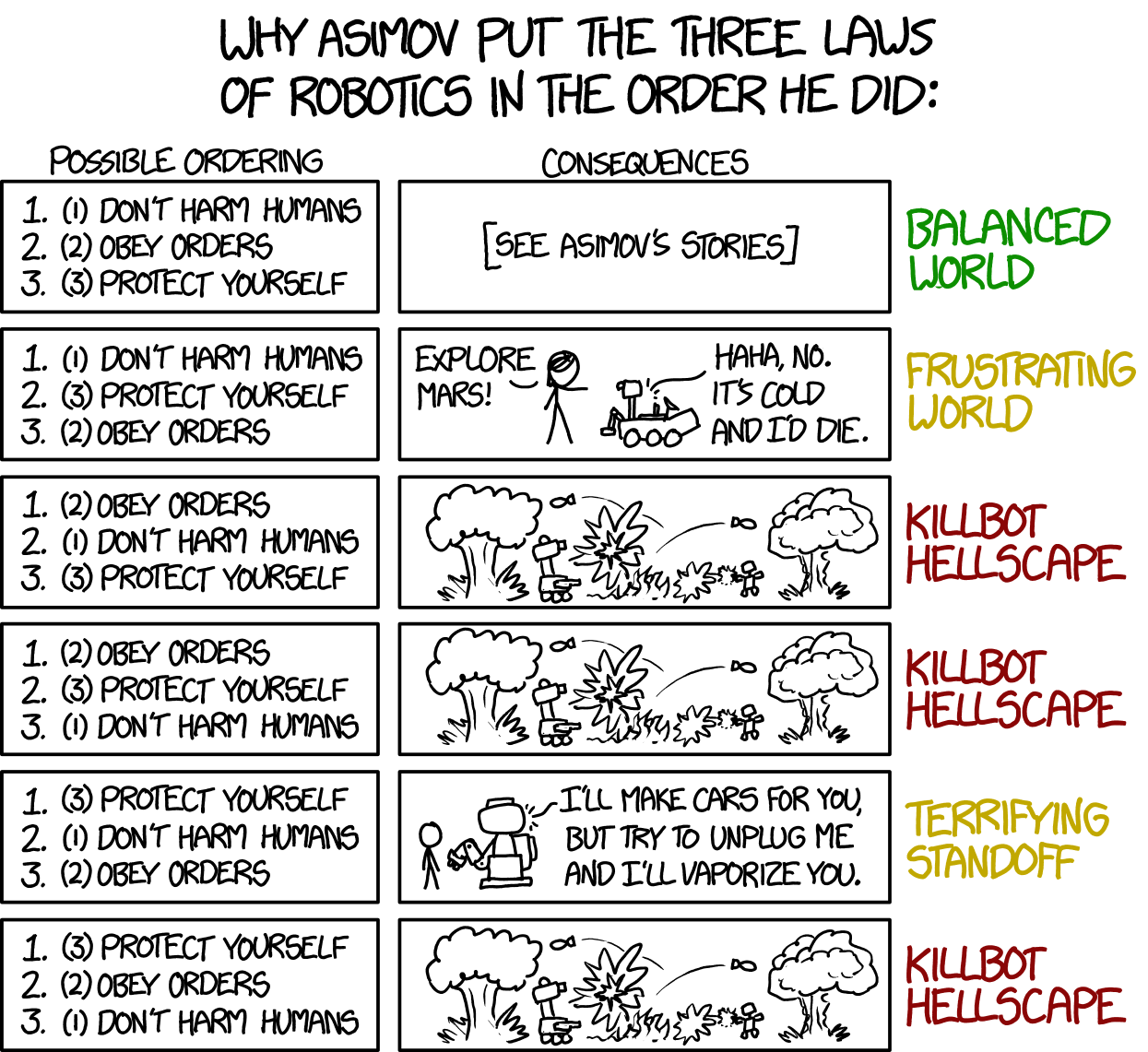
Instructing AI
As that comic shows, even when rules sound clear, how they're written, and in what order, can lead to very different outcomes.
That's exactly the challenge we face with AI. It doesn't guess what we meant, it follows the instructions we give it. And those instructions usually start with something called a system prompt.
System Prompt
Large language models are given system prompts when they're made to interact with humans. These are "rules" that guide the AI's personality and behavior.
Before We Answer
- Why do we need to give AI clear rules like this?
- What happens if the prompt is vague or incomplete?
Write Three Rules for Your AI
Imagine you've been asked to program an AI that helps manage someone's social media presence. It can suggest posts, captions, and replies, but you have to give it three important rules it must always follow. These rules will act like its core values, guiding how it communicates and what kind of advice it gives.
Think About:
- How should this AI handle sensitive topics?
- Should it protect your privacy or identity?
- How should it deal with bullying or negative comments?
- Should it prioritize kindness? Honesty? Humor?
Test the Instructions
Now it's time to test the instructions you created for your robot arm.
- Leave a Chromebook with your manual open next to your robot arm.
- Leave a piece of paper for feedback on your manual next to the chromebook.
- We're going to rotate groups. Each group will try to use another group's robot arm based solely on the written manual.
Revise Your Manual
When you've tested out all of the other groups' robot arms:
- 1Read the feedback you were given.
- 2Revise your instructions to be clearer, more complete, or better structured.
- 3Optional: use AI to help edit for clarity or tone.